
Pac Palace in Warsaw – A Hidden Architectural Masterpiece on Miodowa Street
2026-05-14
Park Skaryszewski – One of Warsaw’s Most Beautiful Parks You’ve Probably Never Heard Of
2026-05-28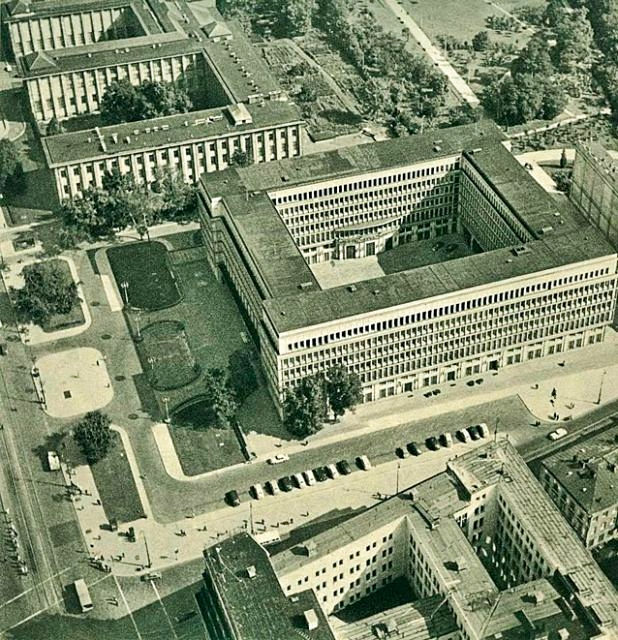
Before the Communist Era – Palaces, Firefighters and Elegant Warsaw
Before World War II, this prestigious corner of Warsaw looked completely different.
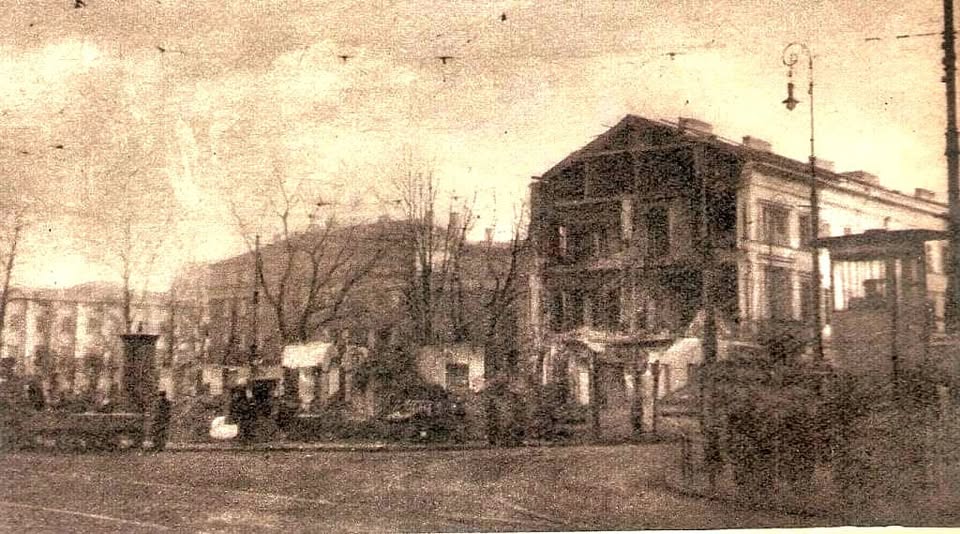
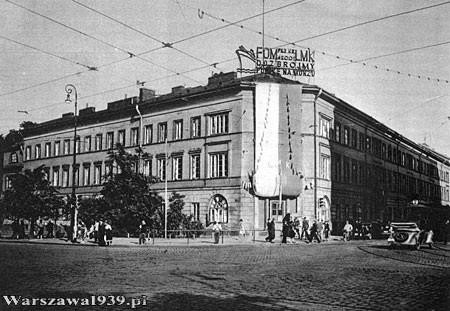
The area consisted of four separate plots:
- on the corner stood an elegant palace designed in 1827 by the famous architect Antonio Corazzi,
- deeper along Nowy Świat street stood a fire station with a tower,
- while the remaining space was filled with residential townhouses.
The location was exceptionally valuable. It sat directly along the Royal Route, close to the Warsaw Escarpment and near major public institutions.
The buildings near the intersection were destroyed during the German bombing of Warsaw in 1939. The remaining structures were ruined during the Warsaw Uprising in 1944 and later demolished after the war.
In postwar reconstruction plans, some architects even proposed opening a huge public square with panoramic views toward the Vistula River and the escarpment. Others imagined removing nearby viaducts and creating a completely new urban composition.
None of that happened. Instead, the intersection largely kept its transportation role and Warsaw gained one of the most symbolic buildings of communist Poland.
Building the Headquarters of Power
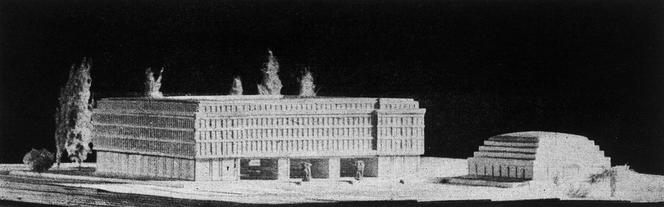
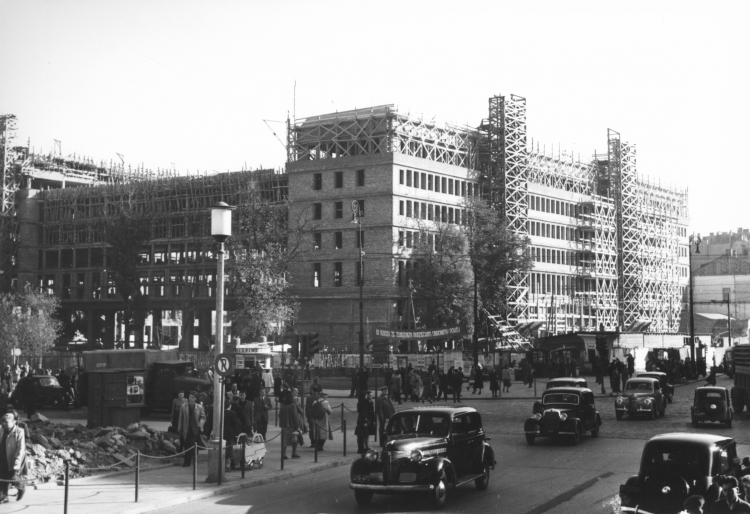
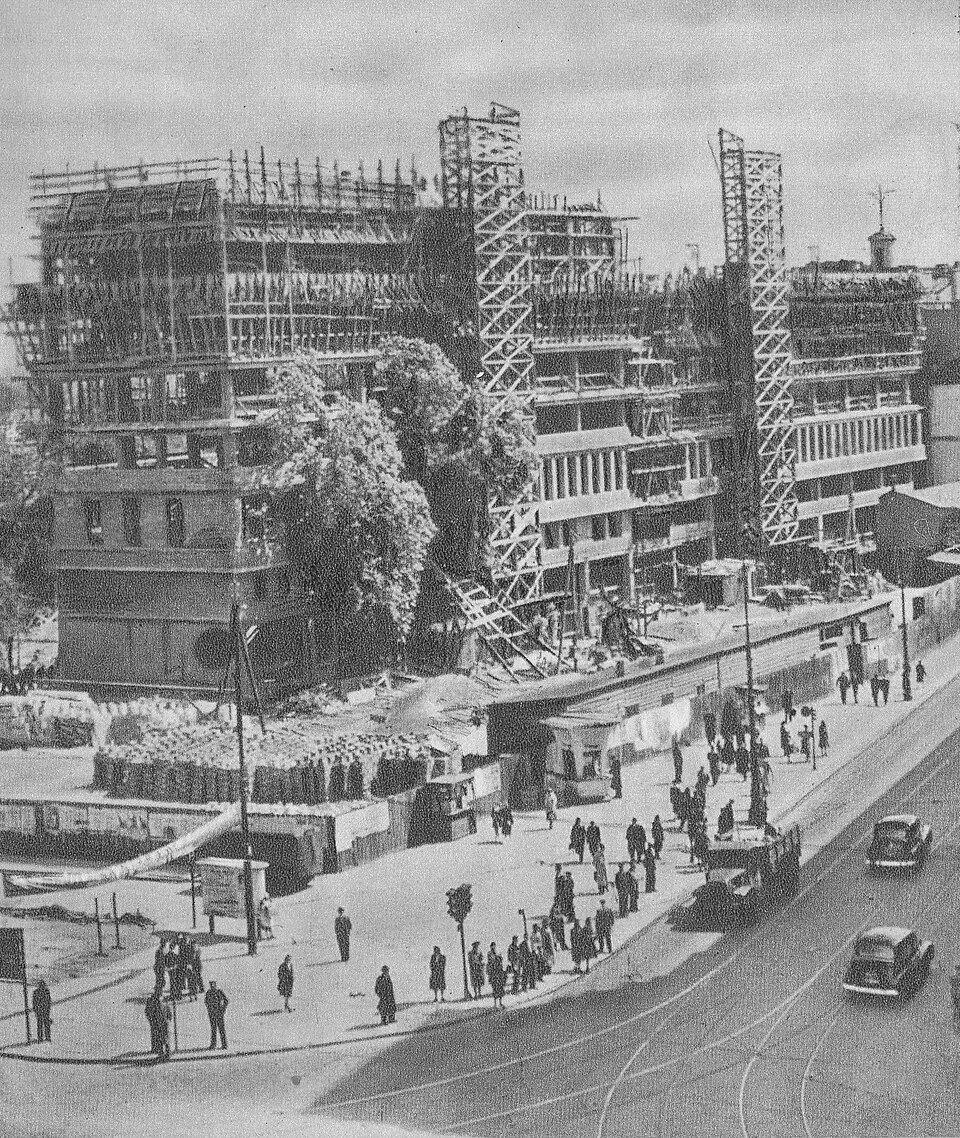
In 1946, the Central Committee of the Polish Workers’ Party began discussing plans for a new headquarters. At the time, the party already claimed around 400,000 members.
To finance construction, authorities organized a public fundraising campaign. Special contribution certificates were sold, and although donations were technically voluntary, public lists of contributors created strong social pressure to participate.
The architectural competition was won by a famous trio nicknamed the “Tigers”:
- Wacław Kłyszewski,
- Jerzy Mokrzyński,
- and Eugeniusz Wierzbicki.
These architects had already built respected modernist projects before World War II and later worked in the Warsaw Reconstruction Office after the war.
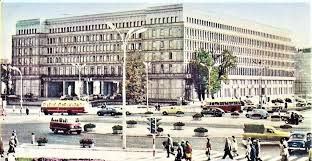
Interestingly, despite the growing Stalinist atmosphere of the late 1940s, the final design remained strongly modernist rather than socialist realist. That makes the building architecturally unique in postwar Warsaw.
A Modernist Fortress in the Heart of Warsaw
The original concept was smaller and more compact, but after the merger of the communist parties in 1948, the project was expanded.
The completed building opened on May 1st, 1952.
Its design contains many fascinating details:
- three-level facade composition,
- rows of repetitive windows with sharp vertical divisions,
- recessed upper floor inspired by prewar modernism,
- and almost identical façades on all sides.
The southern façade, however, hides one of the building’s most interesting political details.
A balcony overlooking Książęca Street was designed next to the office of the Party’s First Secretary. The idea was clear: communist leaders would speak to crowds gathered on a future monumental square below.
But the square was never built.
Warsaw residents joked quietly:
“What happens if you turn your backside toward the Party headquarters?
You’ll see Nowy Świat.” (Nowy Świat in Polish mean literally: New World)
The authorities became so paranoid about security that windows in neighboring buildings were reportedly bricked up to prevent views into party offices. Ironically, top communist officials ended up working with views of blank walls instead of monumental public spaces.
Hidden Luxury Behind the Political Facade
Although the exterior appears restrained, the interiors were designed with remarkable luxury.
The building included:
- marble staircases,
- decorative metalwork,
- elegant halls,
- richly furnished offices,
- and even a private cinema room where party officials could reportedly decide which films required censorship after screenings.
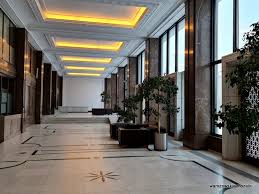
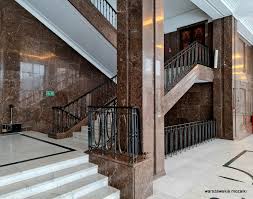
Much of the original furniture survives to this day.
The entire structure was also built with Cold War fears in mind. Beneath the building lies a reinforced basement shelter designed to survive the collapse of the structure above.
One particularly strange detail fascinates many visitors on a Warsaw walking tour:
the staircase from Nowy Świat was paved using marble taken from the destroyed mausoleum of German President Paul von Hindenburg in Tannenberg.
From Communist Headquarters to the Warsaw Stock Exchange
After the fall of communism in 1989, the building entered a completely new chapter.
For a time, it became the headquarters of the Warsaw Stock Exchange – a symbolic transformation from communist central planning to free-market capitalism.
Later, parts of the building housed offices, businesses and even a Ferrari showroom.
In 2009, the building was officially entered into the heritage register, and a major renovation followed in 2015.
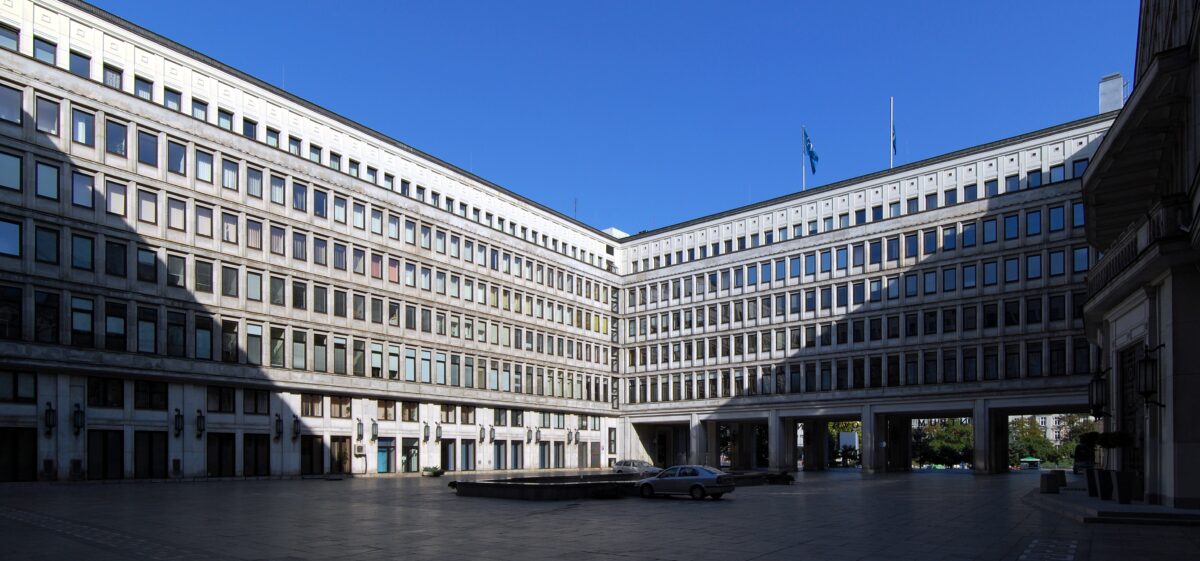
Why This Building Matters on a Warsaw Tour
For visitors exploring the city with a knowledgeable Warsaw guide, the former Party Headquarters is much more than a communist office building.
It represents:
- postwar reconstruction,
- political control,
- architectural ambition,
- Cold War paranoia,
- and the dramatic transformation of modern Poland.
It is also one of the best places to understand how Warsaw constantly reinvents itself. Few cities can turn a communist power center into a financial institution – and then into protected architectural heritage.
That is why this stop has become an increasingly fascinating point on every thoughtful walking tour of Warsaw focused on the communist times in Poland.