
Krasiński Palace – A Baroque Gem on Every Walking Tour of Warsaw
2026-05-08
The Former Communist Party Headquarters in Warsaw
2026-05-22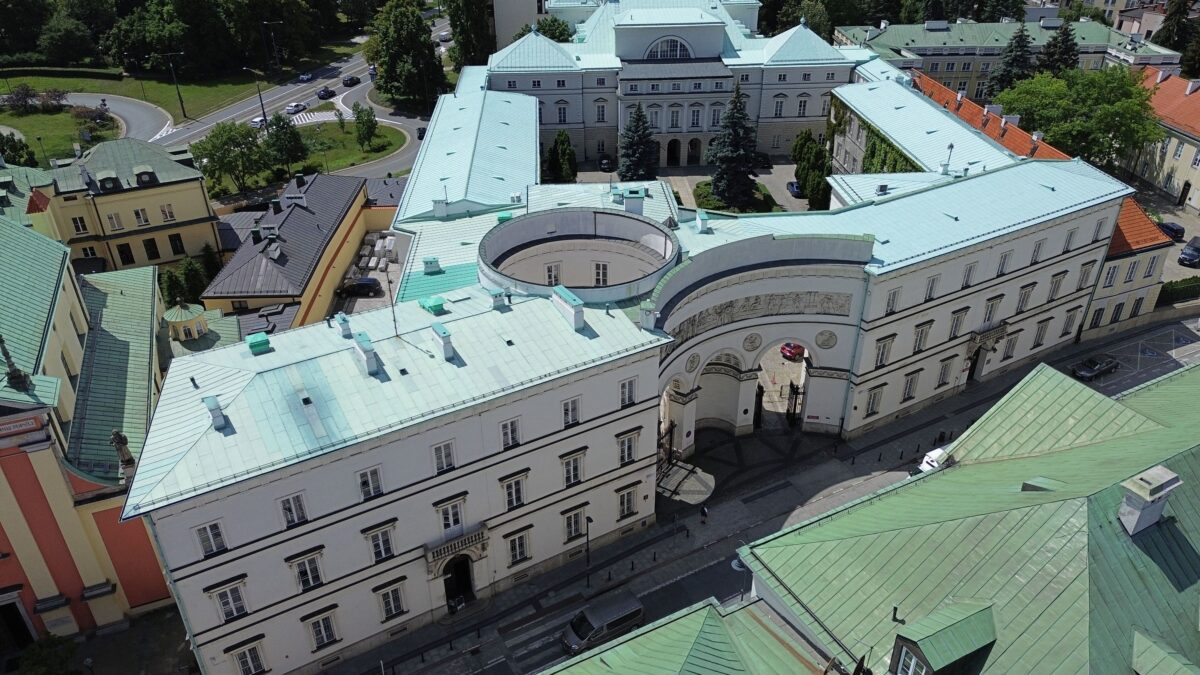
From Baroque Residence to Aristocratic Masterpiece
The palace was originally built between approximately 1690 and 1697 for Dominik Radziwiłł, Grand Chancellor of Lithuania, most likely according to a design by the celebrated architect Tylman van Gameren.
At the time, the residence followed the classic baroque arrangement fashionable among the Polish aristocracy:
- a main palace building,
- side wings facing the street,
- and an elongated garden stretching behind the residence.
Throughout the 18th century, the palace changed owners several times. It belonged to important noble families including the Załuski, Radziwiłł, and Czartoryski families. During this period, additional buildings along Miodowa Street were designed by Jakub Fontana, one of the leading architects of late Baroque Warsaw.
The residence suffered damage during the Kościuszko Uprising in 1794 and later declined significantly. Between 1807 and 1809, the neglected palace even served as Austrian military barracks and a field hospital.
Everything changed in 1825, when the property was purchased by General Ludwik Pac.
Ludwik Pac and Henryk Marconi – A Visionary Collaboration
Ludwik Pac was no ordinary aristocrat. He was a general of the Duchy of Warsaw, a participant in the November Uprising, and one of the most colorful figures of early 19th-century Poland.
Pac invited the Italian architect Henryk Marconi to Poland — a decision that permanently changed Warsaw’s architectural history. Marconi would later become one of the most influential architects in the city.
For Pac Palace, Marconi transformed the old Baroque residence into an extraordinary blend of:
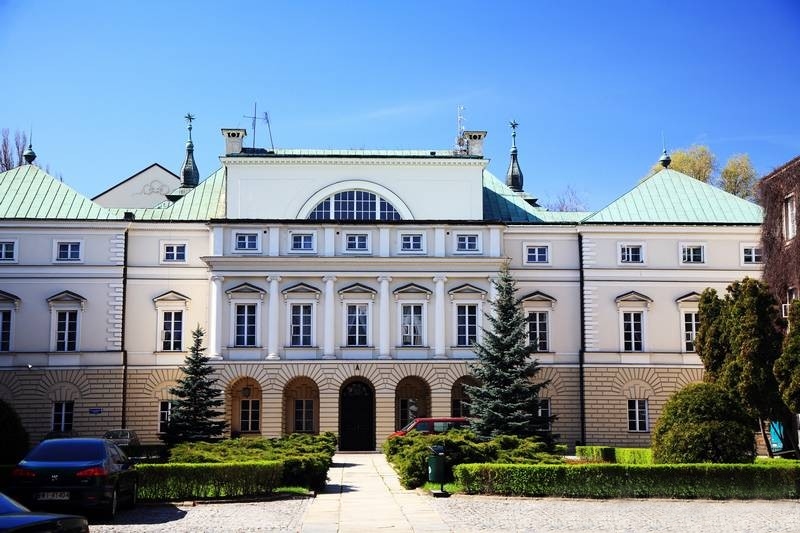
- strict classicism,
- Italian Renaissance inspiration,
- and theatrical urban illusion.
The architect preserved the general shape of the original palace but completely reinvented its appearance. Today, only the front façade still fully reflects Marconi’s 19th-century vision, while other elevations were reconstructed after World War II in a more Baroque form.
The Optical Illusion Hidden on Miodowa Street
This is where the story becomes truly fascinating for visitors on a walking tour in Warsaw.
The palace plot stood at an awkward angle to Miodowa Street. Normally, this would make the residence appear visually distorted from the street perspective.
Marconi solved the problem with remarkable creativity worthy of Renaissance masters.
He curved the central gateway section of the front wing into an arc and created a semi-circular recess with three arches:
- the left arch leads only to a small circular courtyard,
- the central arch is blind,
- but the right arch frames a perfectly calculated view of the palace façade.
The result?
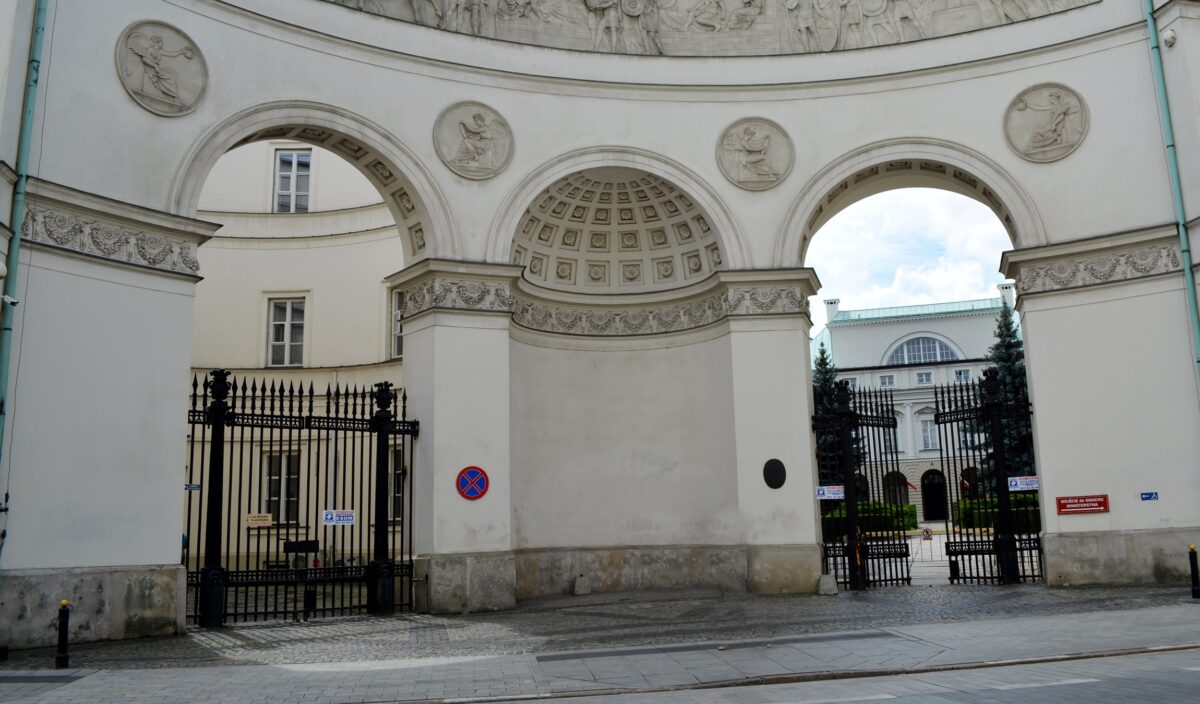
From the street, the observer has the illusion that the palace stands parallel to Miodowa Street – even though it does not.
It remains one of the cleverest architectural tricks in Warsaw.
The Longest Sculptural Relief in Warsaw
The front buildings are often modestly called “side wings” (oficyny), but in reality they are richly decorated works of art.
The most spectacular feature is the longest figurative relief in Warsaw, sculpted by Ludwig Kaufmann, a student of the famous Italian sculptor Antonio Canova.
The relief depicts the Roman general Titus Flaminius proclaiming freedom to Greek cities – a scene filled with political symbolism and classical references fashionable among European elites of the period.
Details like this make Pac Palace one of the most underrated architectural stops on a private Warsaw tour.
A Palace of Trials, War and Survival
Ironically, Ludwik Pac himself never truly enjoyed the completed palace. Construction and decoration works lasted from the 1820s until around 1830. After the failure of the November Uprising, Pac was forced to flee Poland, and the Russian authorities confiscated all his property.
Later, the palace became home to the District Court, where some of the most famous criminal trials of interwar Poland took place – including the sensational case of Rita Gorgonowa, accused of murdering her employer’s daughter in one of the most widely followed court cases of the Second Polish Republic.
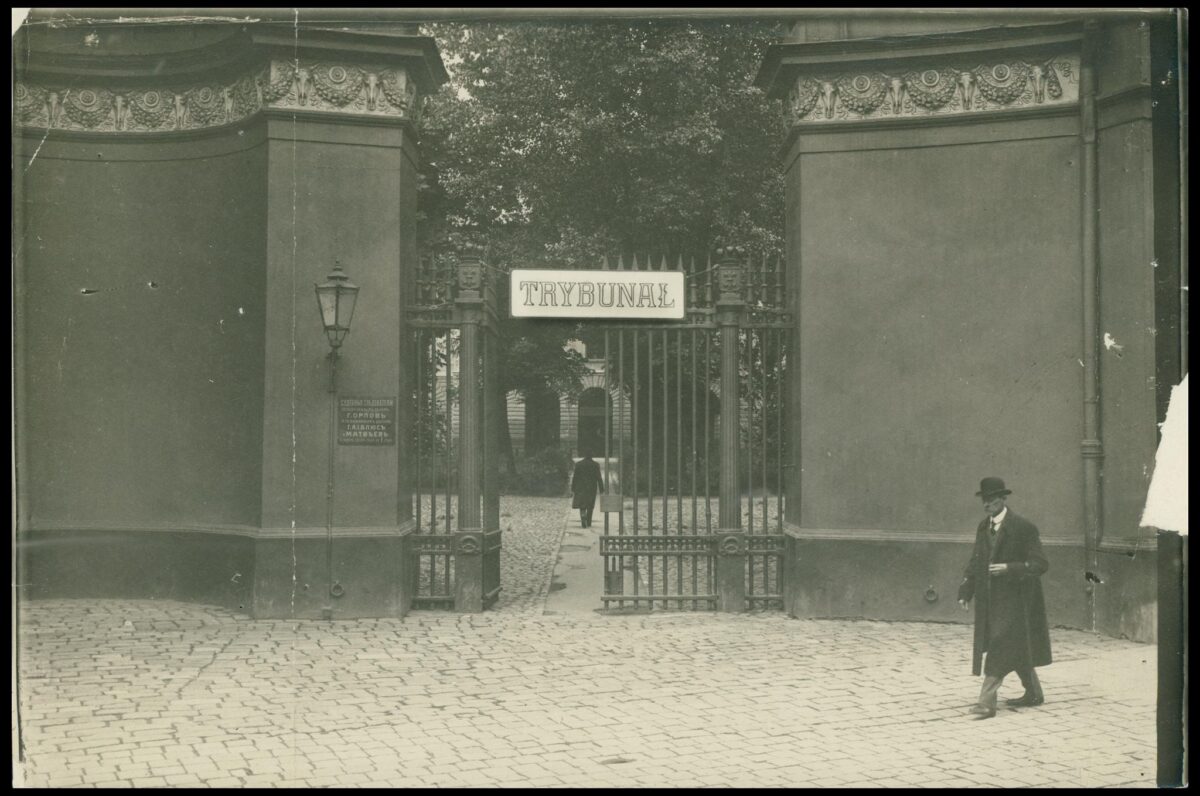
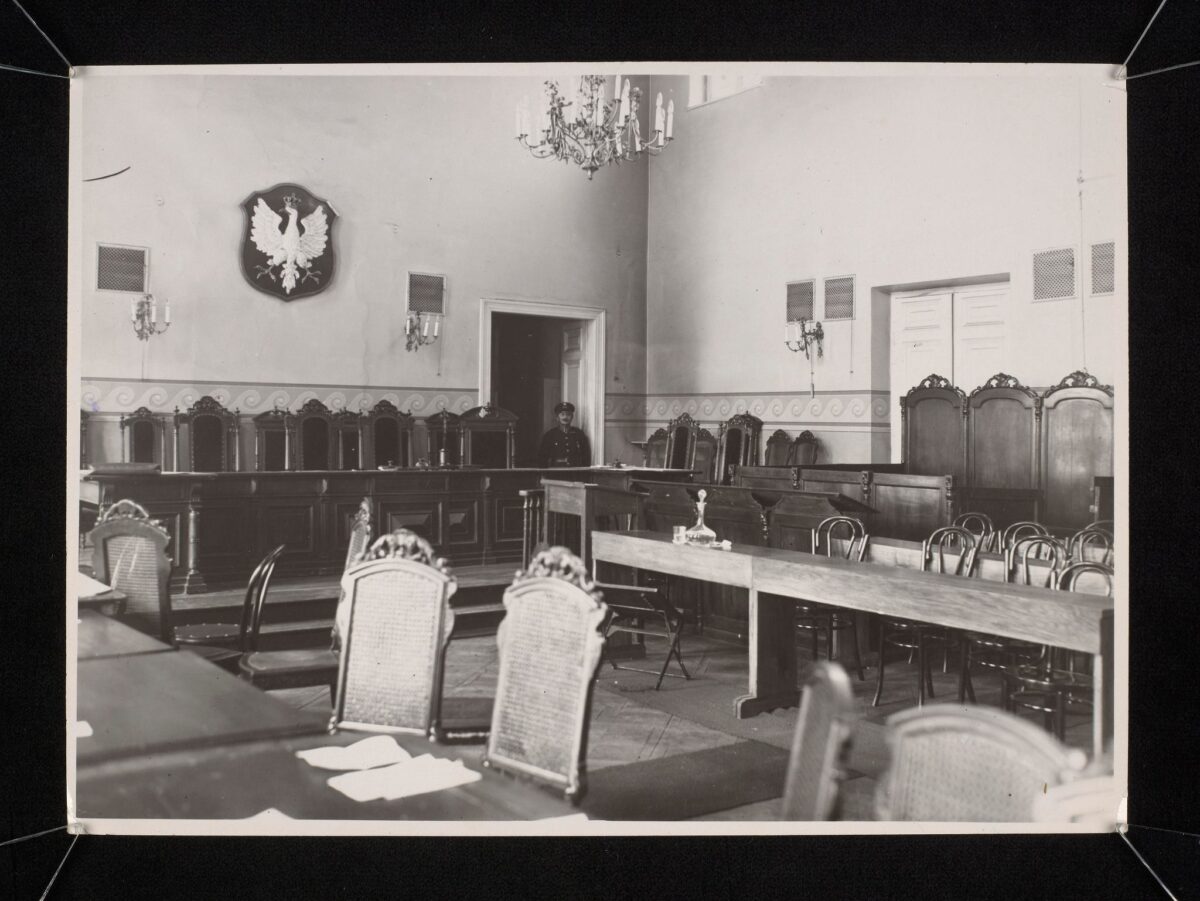
Despite a fire during the German invasion in 1939, many of the palace’s most valuable interiors survived or were carefully reconstructed after the war.
Among the highlights are:
- the monumental ballroom inspired by the Roman Baths of Diocletian,
- a Moorish Room decorated with fantasy Arabic-inspired ornamentation,
- and a neo-Gothic chamber resembling an English Romantic chapel.
Today, these interiors remain some of the most extraordinary hidden spaces in Warsaw.
Pac Palace Today – A Hidden Treasure for Curious Visitors
After World War II, the palace was rebuilt between 1947 and 1950 and adapted for the Ministry of Health, which still occupies the building today.
Although the interiors are not regularly open to tourists, the palace remains one of the most fascinating architectural landmarks on Miodowa Street. For travelers exploring Warsaw with a knowledgeable Warsaw guide, it offers a perfect story of:
- aristocratic ambition,
- architectural genius,
- political drama,
- and Warsaw’s extraordinary ability to survive destruction.
And like many places in Warsaw, the deeper you look, the more layers you discover.A with an experienced Warsaw guide provides a deeper understanding of how the city evolved through centuries of glory, tragedy and resilience.