

Warsaw Central Railway Station (Warszawa Centralna) – A Modernist Icon in the Heart of Warsaw
2026-06-24
Warsaw Metro – The Fastest Way to Explore Poland’s Capital
2026-07-04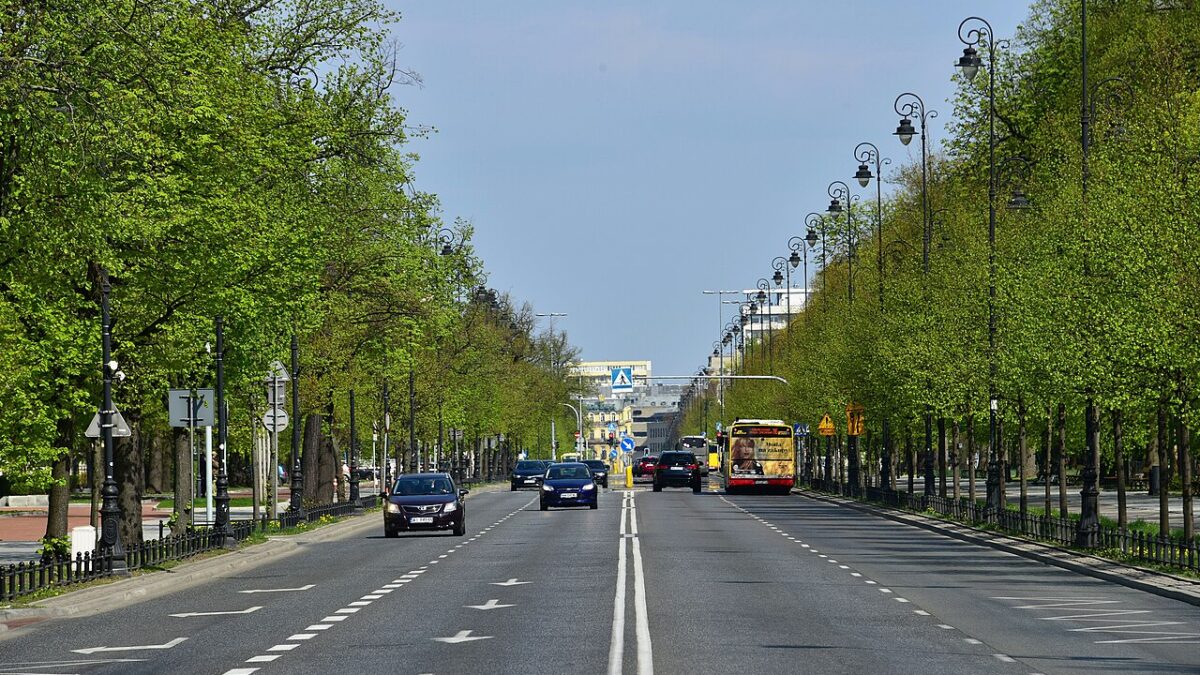
From a royal road to Warsaw’s most elegant avenue
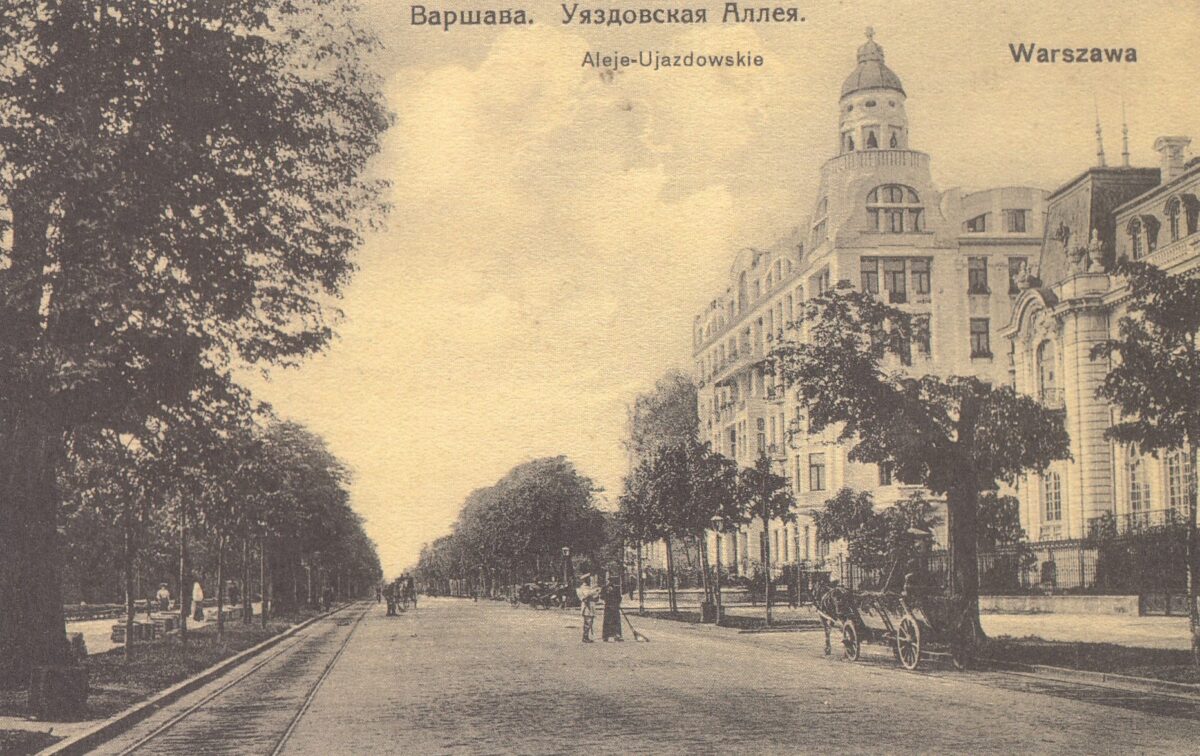
The history of Ujazdowskie Avenue goes back to the 18th century. Between 1724 and 1731, King Augustus II the Strong created a road known as the Calvary Road (Droga Kalwaryjska) on the lands of Ujazdów area. Along the western side of the road, 28 small chapels were built every 80 meters, designed by architect Johann Daniel Jauch. Stone benches were placed on the eastern side, and trees were planted, creating a long and impressive avenue.
The road took its name from the nearby settlement of Ujazdów, a place with medieval origins. The former settlement of Jazdów was located near today’s Agrykola Street and was connected with the nearby Ujazdów Castle.
The castle itself was built in the early 17th century by King Sigismund III Vasa and completed under King Władysław IV. After being damaged during the Swedish invasion, it was rebuilt and later transformed into military buildings.
The royal landscape of Warsaw
During the reign of King Stanisław August Poniatowski, the area became part of a grand urban plan connecting royal residences and important city spaces. Ujazdowskie Avenue became an important element of the famous royal route linking the Royal Castle, Łazienki Park, and the southern parts of Warsaw.
For anyone interested in Warsaw sightseeing, this route is a perfect example of how the city developed around royal ambitions and European urban ideas. The avenue was also connected with the development of today’s Łazienki Park and the nearby Botanical Garden. In the 19th century, these areas became favourite places for walks, social gatherings, horse riding, and elegant carriage rides.
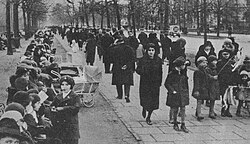
Palaces, gardens, and the golden age of Ujazdowskie Avenue
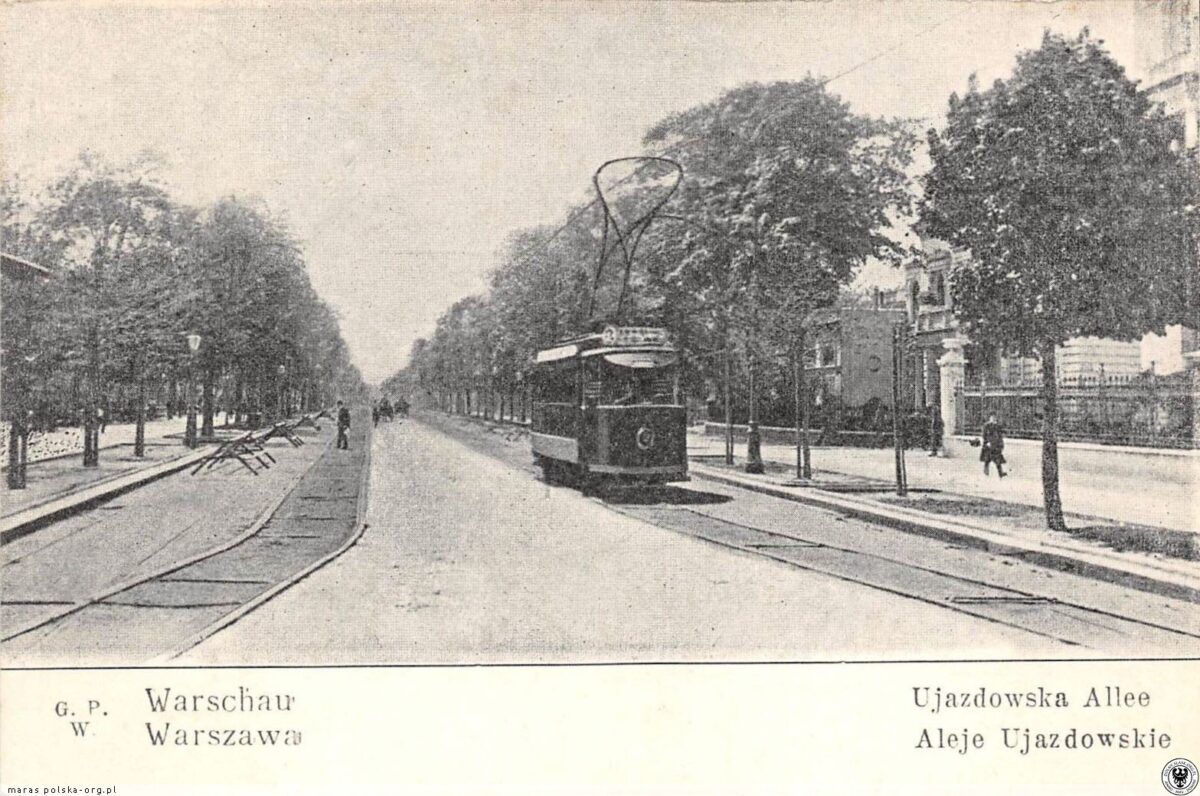
By the second half of the 19th century, Ujazdowskie Avenue became the most fashionable street in Warsaw. Aristocrats and wealthy citizens built elegant residences along the avenue, including beautiful villas and palaces.
Some of the most notable buildings include:
- the Poznański Villa,
- the Sobański Palace,
- the Wielopolski Palace,
- the Rzyszczewski Palace,
- the Strzałecki House, known as “Under the Giants”.
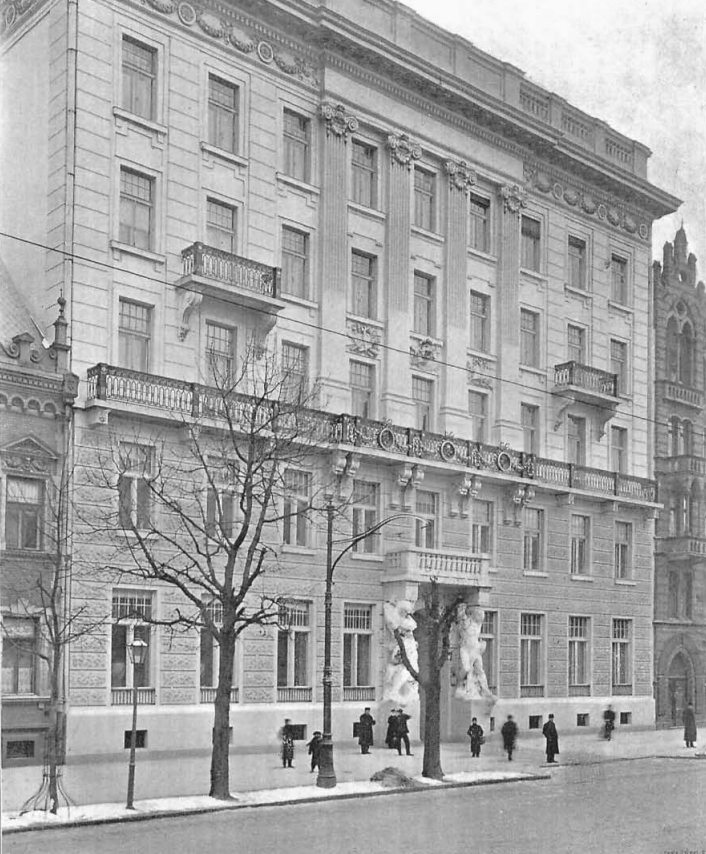
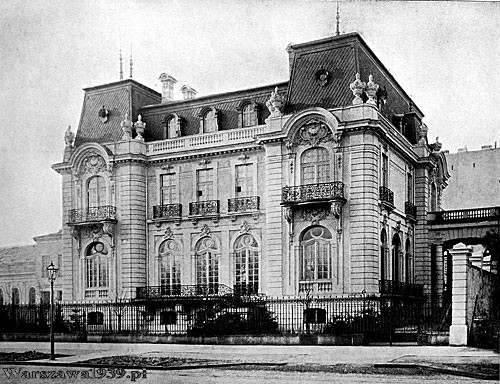
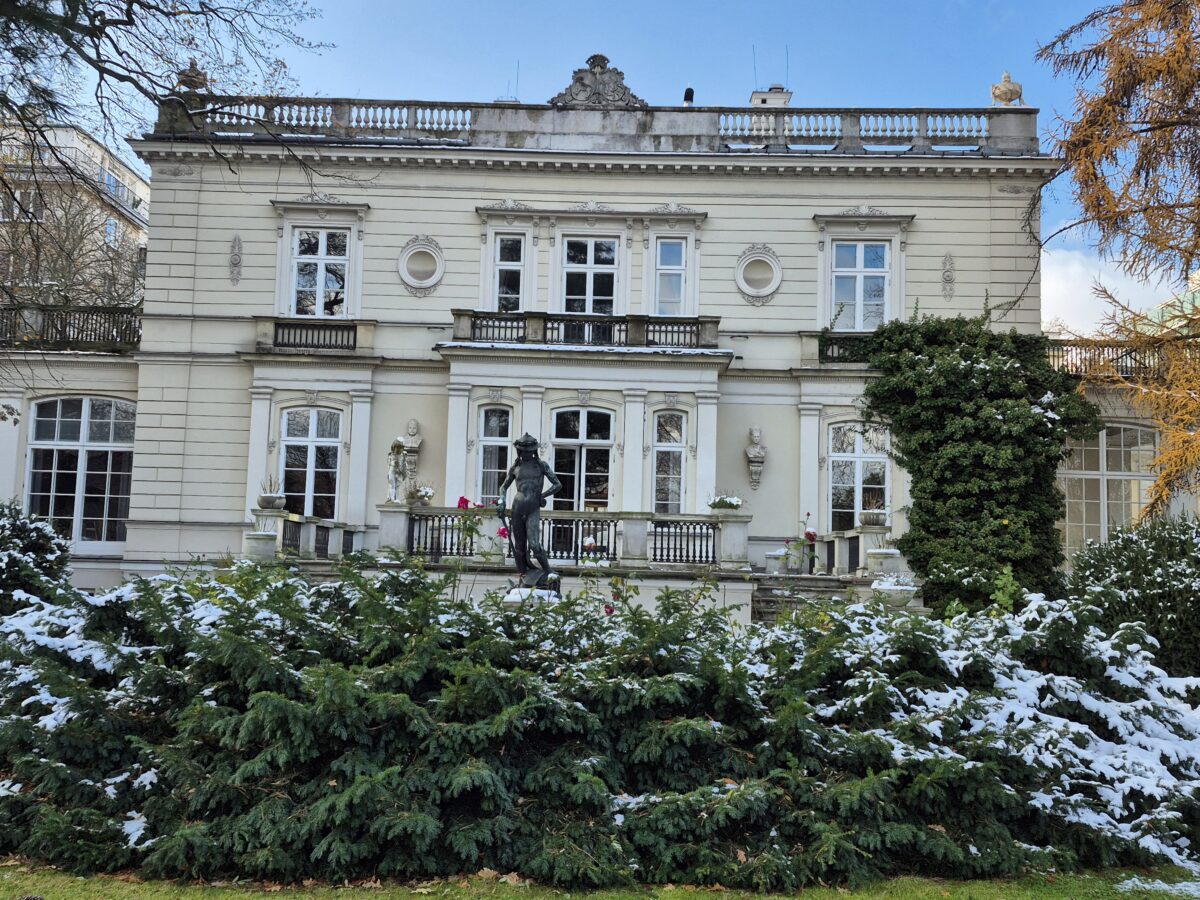
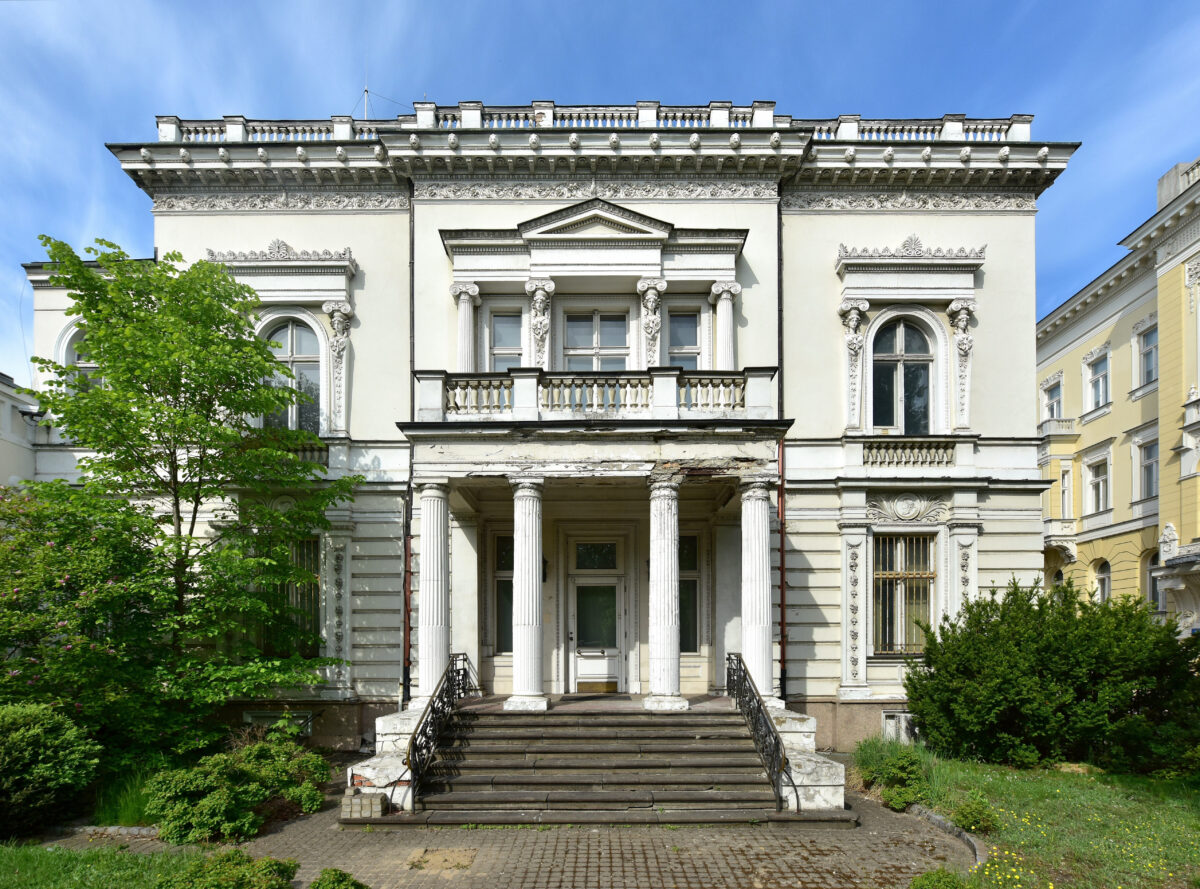
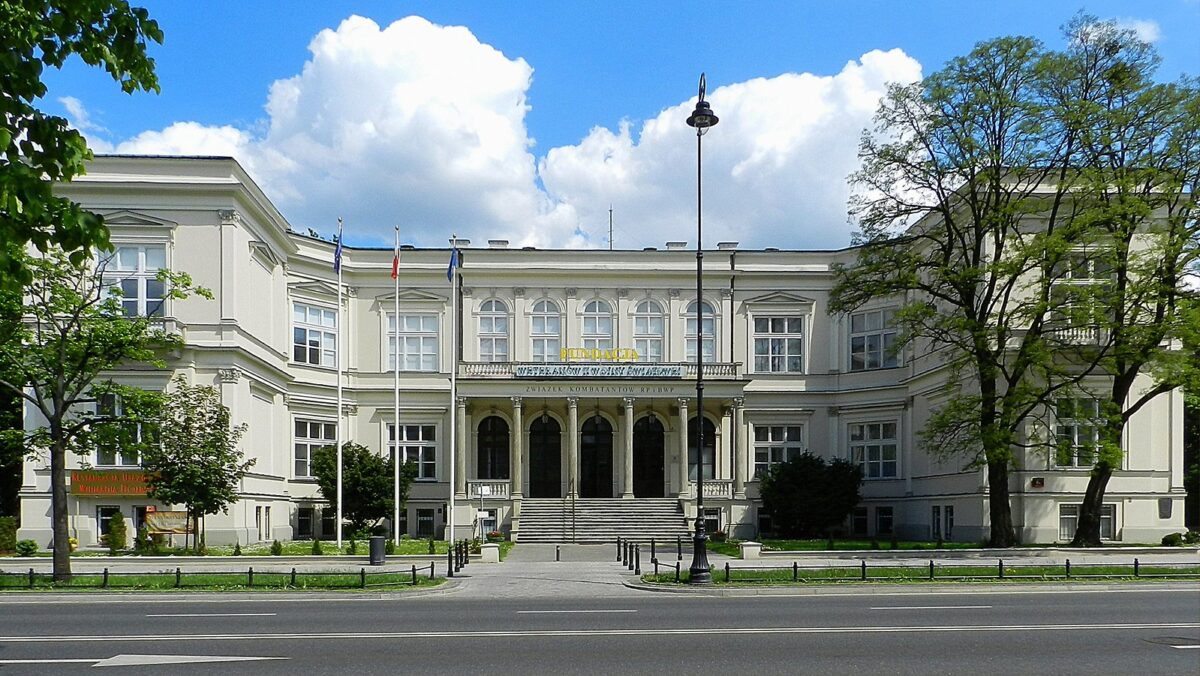
These buildings created the unique atmosphere that made Ujazdowskie Avenue the Warsaw equivalent of a grand European boulevard.
A Warsaw guide walking along this street can still show visitors traces of the city’s former elegance, hidden details, and architectural stories.
Ujazdowskie Avenue during wars and political changes
The avenue witnessed many dramatic moments in Polish history.
During the November Uprising in 1830, young cadets led by Piotr Wysocki marched through this area fighting against Russian forces. Almost a century later, in 1926, Ujazdowskie Avenue again became a scene of political conflict during the May Coup led by Józef Piłsudski.
Before World War II, the avenue became a diplomatic district filled with embassies and government institutions. It was also known as a place of fashion, elegant walks, and city life.
During the German occupation, Warsaw suffered enormous destruction. Many buildings along Ujazdowskie Avenue were damaged or destroyed, and the famous Chopin monument in nearby Łazienki Park was demolished.
In February 1944, one of the most famous actions of the Polish underground resistance took place nearby: the assassination of Franz Kutschera, the head of the SS and police in occupied Warsaw.
Rebuilding Warsaw after World War II
After the war, Ujazdowskie Avenue was rebuilt. Some historic buildings were restored, while others were replaced with new architecture reflecting post-war Poland.
The avenue regained its importance as a political and diplomatic centre. Many embassies found their homes here, and today it remains one of Warsaw’s most representative streets.
A walk along Ujazdowskie Avenue is a journey through different chapters of the city’s history: royal Warsaw, 19th-century elegance, wartime tragedy, and modern European capital.
Visiting Ujazdowskie Avenue with a Warsaw tour guide
For travellers looking for a guided tour Warsaw experience, Ujazdowskie Avenue offers much more than beautiful views. Behind every palace, garden, and monument there is a story about kings, artists, politicians, resistance fighters, and ordinary citizens who shaped Warsaw.
Exploring this area with a local Warsaw tour guide helps visitors discover details that are easy to miss: hidden architectural symbols, forgotten stories, and connections between Warsaw’s past and present.
Whether you are interested in Warsaw history, architecture, sightseeing, or discovering the city beyond the typical tourist route, Ujazdowskie Avenue is one of the best places to start.