
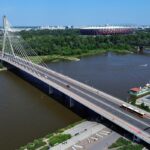
The Świętokrzyski Bridge – A Modern Icon on the Vistula river
2025-11-27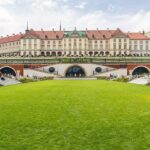
Kubicki Arcades – Warsaw’s Hidden Street Beneath the Royal Castle
2025-12-15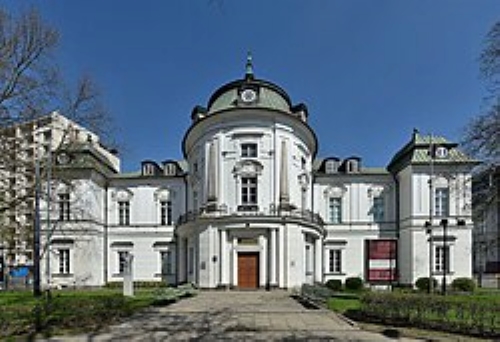
From Baroque Residence to Urban Survivor
The palace was most likely built between 1727 and 1729 for Jan Jerzy Przebendowski. It remained in his family until 1768, when it passed to the Kossowski family, who initially shared it with the Łętowski family. Between 1783 and 1789, the building was slightly remodeled according to a design by Szymon Bogumił Zug.
By the early 19th century, elegance took a back seat to practicality. The palace was rented out as the Hotel de Hamburg, while other tenants came and went: a wax figures cabinet, illusionists and entertainers, a restaurant, offices supervising domestic workers, and even a commercial tribunal. In the outbuilding, factories produced buttons, metal goods, and seals.
Decline, Rescue, and the Radziwiłłs
In 1831 the palace was acquired by Jakub Piotrowski, then changed hands twice within little more than a decade. One owner converted it into a tenement house – a move that led to gradual degradation. Salvation came in 1863, when Jan K. Zawisza purchased the palace and ordered renovations.
In 1912, the building was sold to the Radziwiłł family, a name that echoes loudly in Polish history.
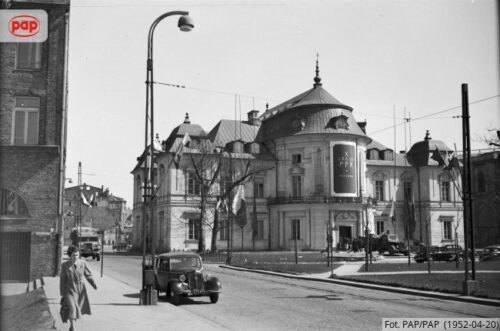
War, Destruction, and Near Oblivion
During the Warsaw Uprising of 1944, the palace stood directly on the frontline along Bielańska Street, protecting the fortified position at the Polish Bank. On August 23, insurgents captured the building; according to accounts, they were greeted by Prince Radziwiłł himself, who had been hiding with his family in the basement.
The next day, a bomb hit the palace. It was then taken over by German forces, and the Radziwiłł family was arrested and deported. By the end of the war, roughly 70% of the building had been destroyed.
Standing in the Way of Progress – and Winning
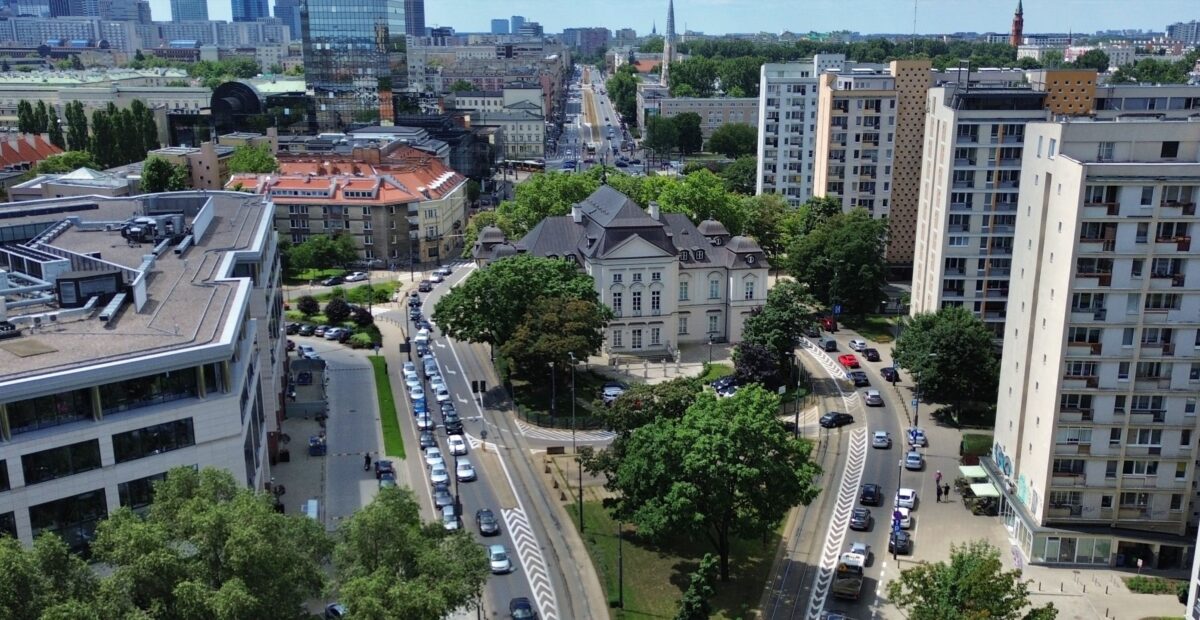
After the war, the palace found itself directly in the path of the planned W-Z Route, a major east–west artery reshaping Warsaw. Thanks to the intervention of architect Professor Jan Zachwatowicz, the palace was spared. In 1947 it was confiscated from Janusz Radziwiłł and rebuilt in 1948–1949 in its original 18th-century Baroque form, according to a design by Bruno Zborowski.
The original garden was removed, the outbuildings demolished, and the W-Z Route was constructed on both sides of the palace – turning it into the architectural island you see today. The palace was completed on July 1, 1949, just days before the official opening of the route.
From Lenin to Independence
Since 1990, the building has housed the Museum of Independence. (Earlier, from 1954 to 1990, it contained the Museum of Lenin – yes, Warsaw does irony very well.) Between 2000 and 2009, the palace even hosted the atmospheric Paradiso cinema.
Why It Matters on a Warsaw Tour
For travelers discovering the city with a Warsaw guide, the Przebendowski Palace is a masterclass in Warsaw history: aristocracy, commerce, war, communist symbolism, and cultural rebirth — all wrapped into one stubbornly standing building.
It’s an essential stop on any thoughtful walking tour of Warsaw, especially for those who want to understand how the city survived destruction and emerged stronger, wiser, and unapologetically itself.