
Gawroński Villa in Warsaw – A Historic Residence and a Window into Polish Modernism
2026-09-15
New Town Market Square Warsaw – Discover the Historic New Town
2026-09-29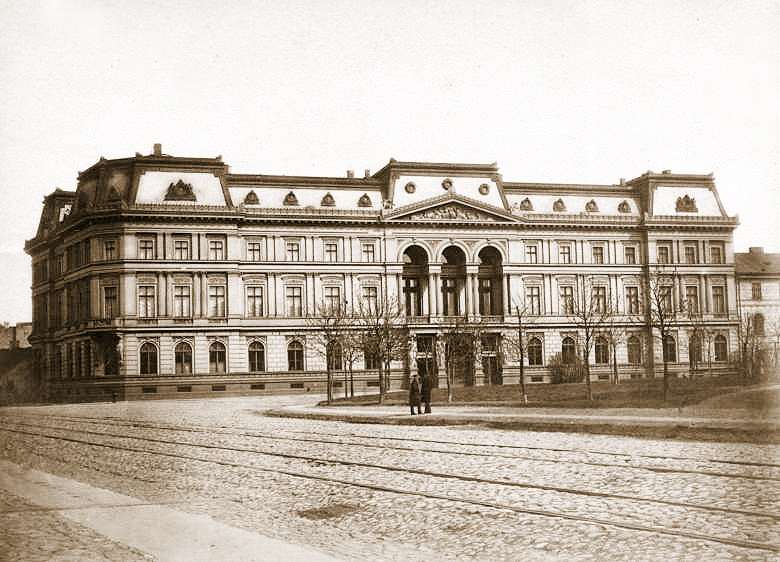
A Palace for Leopold Kronenberg
Leopold Kronenberg commissioned the palace in 1867 from Berlin architect Friedrich Hitzig. Construction was completed in 1871. Kronenberg was one of the most influential entrepreneurs and bankers in 19th-century Warsaw. Born in the city in 1812 into a wealthy Jewish family, he later converted to Calvinism in 1846. His business activities played an important role in the economic development of the Kingdom of Poland, then part of the Russian Empire.
Kronenberg was involved in establishing major financial and insurance institutions, founded some of Warsaw’s first sugar factories and helped finance the Vistula Railway, which connected Warsaw with cities including Lublin. He was also active in politics and philanthropy, including initiatives supporting education and poor children. The residence reflected his wealth and status.
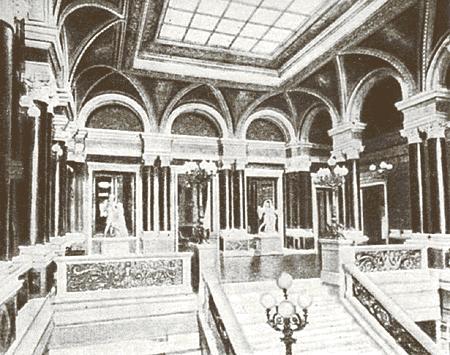
The palace had two floors and an imposing mansard roof. Its façade faced the square, with a central loggia supported by paired Corinthian columns and prominent projections at both ends. Inside was an impressive staircase with white marble steps, a glazed ceiling and walls decorated with cherry-coloured faux marble. The palace also contained a carriage house, stables and servants’ quarters. Its technical facilities included systems for gas lighting and hot-air heating – remarkably modern features for the period.
From Fire to Ruins
The palace suffered a major fire in March 1939, when the roof and two rooms were destroyed. Few months later, in September 1939, incendiary bombs hit the building during the German invasion of Poland. The entire interior and furnishings were destroyed, although the solid walls survived well enough to make reconstruction possible. It did not happen. After the war, there were proposals to use the palace as the embassy of East Germany or France, but neither accepted the proposal. In 1959, Kronenberg Palace was removed from the heritage register, and in 1962 its ruins were demolished.
Not everything from Kronenberg Palace disappeared. Two caryatids from its colonnade survived and can still be seen in the lapidarium of the Muzeum of the Earth (Muzeum Ziemi) on al. Na Skarpie 20/26.
From Kronenberg Palace to Victoria Hotel
A completely different building eventually appeared on the site. Between 1973 and 1976, the Victoria Hotel was constructed by a Polish-Swedish team of architects. Built of white concrete and fitted with reflective copper-gold glass, the hotel became one of the symbols of the Gierek (Polish communist party leader since 1970) era’s vision of modernity in Warsaw. It represented a striking contrast to Kronenberg’s lavish 19th-century residence. Today, after several transformations, the building operates as Sofitel Warsaw Victoria.
For anyone exploring the city with a Warsaw tour guide, this is a fascinating example of how dramatically one address can change. The site tells a story of 19th-century wealth, wartime destruction, post-war decisions and socialist modernity.
So when you walk past the Victoria Hotel, remember that beneath this modern landmark lies the story of a palace that once represented the wealth and ambitions of one of Warsaw’s most prominent 19th-century figures.